
Commercial HVAC Troubleshooting for Small Businesses
When the air conditioning stops keeping up, the problem quickly becomes more than an inconvenience. Employees lose focus, customers may leave sooner, temperature-sensitive products can be affected, and an overworked system can drive up operating costs. For small businesses around Hammond, knowing what to check—and when to call a professional—can help limit downtime during Louisiana’s hottest weather.
This guide covers common commercial rooftop HVAC problems, safe troubleshooting steps, causes of uneven temperatures, and signs that a cooling system may be approaching failure. It also explains how preventive maintenance can turn an unexpected shutdown into a scheduled, manageable repair.
Start With These Safe Troubleshooting Steps
If your commercial AC is blowing warm air or will not start, begin with simple checks that do not require opening equipment panels or climbing onto a roof.
- Review the thermostat or building controls. Confirm that the system is set to cooling, the temperature is below the current room temperature, and the schedule has not been changed. Smart thermostats sometimes revert to energy-saving schedules after an outage or software update.
- Check the electrical panel. Look for a tripped breaker, but do not reset it repeatedly. A breaker that trips again may indicate a compressor, motor, wiring, or electrical problem requiring professional diagnosis.
- Inspect accessible air filters. A clogged filter restricts airflow, reduces cooling, and can contribute to a frozen evaporator coil. Replace it with the correct size and efficiency rating for the system.
- Check supply and return vents. Make sure furniture, shelving, displays, or stored inventory are not blocking airflow.
- Look for obvious water or ice. Water around an indoor unit may point to a clogged condensate drain. Ice on accessible refrigerant lines can indicate restricted airflow, a control issue, or low refrigerant.
Turn the equipment off and request air conditioning repair if you smell burning, hear grinding or electrical buzzing, see smoke, or notice ice continuing to form. Refrigerant, electrical, and internal mechanical work should be left to a trained HVAC technician.

Why Commercial AC Systems Blow Warm Air
Commercial AC blowing warm air can have several causes, from a simple control setting to a compressor failure. Common possibilities include:
- A dirty filter or blocked return restricting airflow
- A frozen evaporator coil
- Dirty condenser coils that cannot release heat efficiently
- A failed capacitor, contactor, blower motor, or condenser fan
- A refrigerant leak
- Damaged or disconnected ductwork
- Incorrect thermostat schedules or faulty sensors
- Excessive heat entering through doors, windows, kitchen equipment, or crowded spaces
A rooftop unit also faces direct sun, heavy rain, debris, and electrical surges. During the Northshore’s muggy season, long run times and high latent moisture loads can expose problems that remained hidden during milder weather.
Avoid treating low refrigerant as something that simply needs to be topped off. Refrigerant operates in a sealed circuit, so a low charge generally means there is a leak or another service issue. Current equipment may also use newer low-global-warming-potential refrigerants such as R-454B or R-32. These A2L refrigerants require compatible tools, training, and installation practices under evolving EPA standards.
Diagnosing Uneven Temperatures in Commercial Buildings
Hot and cold spots are especially common in restaurants, offices, salons, clinics, and retail spaces where occupancy and heat-producing equipment vary throughout the day. Before assuming the HVAC unit is undersized, consider how the building is being used.
Common causes of uneven cooling
- Thermostats placed near exterior doors, sunny windows, kitchens, or electronics
- Closed dampers, blocked vents, or unbalanced ductwork
- Leaky ducts above the ceiling
- Dirty coils or filters reducing total airflow
- A failing blower or variable-speed control
- Renovations that changed room layouts without changing air distribution
- An HVAC system that is oversized, undersized, or no longer suited to the space
Write down temperatures in the affected areas at several points during the day. Note occupancy, direct sunlight, equipment use, and whether doors are frequently opened. These details help a technician determine whether the cause is airflow, controls, duct design, humidity, or equipment capacity.
Modern zoning controls and IoT-enabled systems can provide better scheduling, remote alerts, and more precise temperature management. For older storefronts or additions without practical duct access, a properly designed mini-split may also solve a specific comfort problem without replacing the entire central system.
Signs of Commercial Cooling System Failure
Some warning signs justify prompt service even if the building is still reasonably comfortable:
- The system runs continuously but cannot reach its setpoint
- Utility costs rise without a corresponding change in hours or occupancy
- The unit repeatedly starts and stops
- Breakers trip or controls display recurring fault codes
- Airflow becomes weak or noisy
- Indoor humidity remains high despite adequate cooling
- Water leaks or musty odors appear
- Repairs become more frequent and expensive
High humidity deserves attention because temperature alone does not determine comfort. A system that cools quickly but does not run long enough may fail to remove sufficient moisture, leaving the building clammy and increasing the risk of odors or microbial growth. Variable-speed equipment and dedicated dehumidification can improve moisture control while reducing unnecessary energy use.
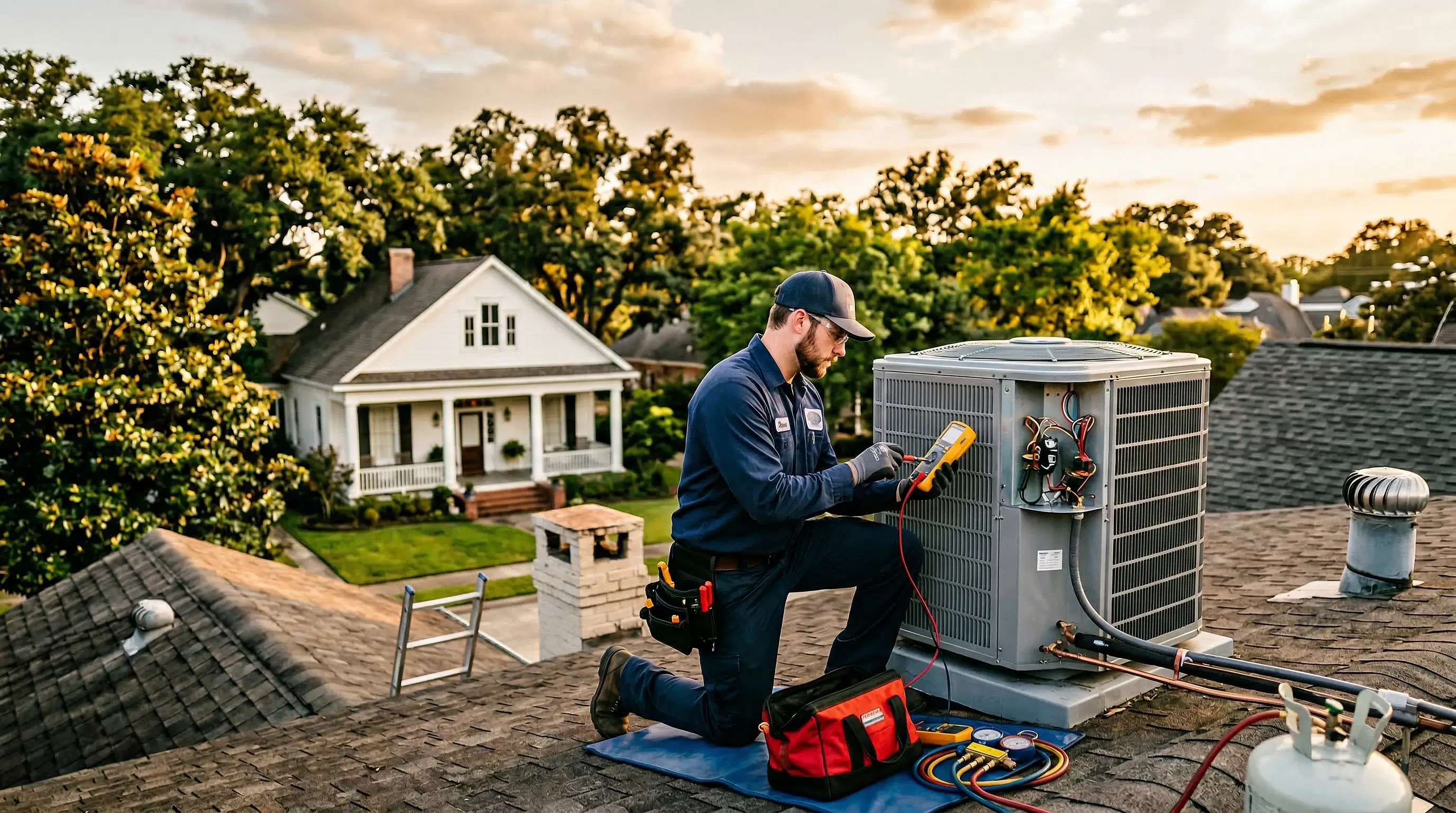
Whether to repair or replace depends on system age, repair history, operating cost, refrigerant availability, and the price of the current repair. A major compressor or coil repair on an aging unit may not be the most economical choice. New equipment uses SEER2 efficiency ratings and may offer better controls, but it must be sized for the building rather than selected by tonnage alone. BCS Mechanical’s light commercial HVAC services can help business owners compare practical repair and replacement options.
Prevent Breakdowns Before They Interrupt Business
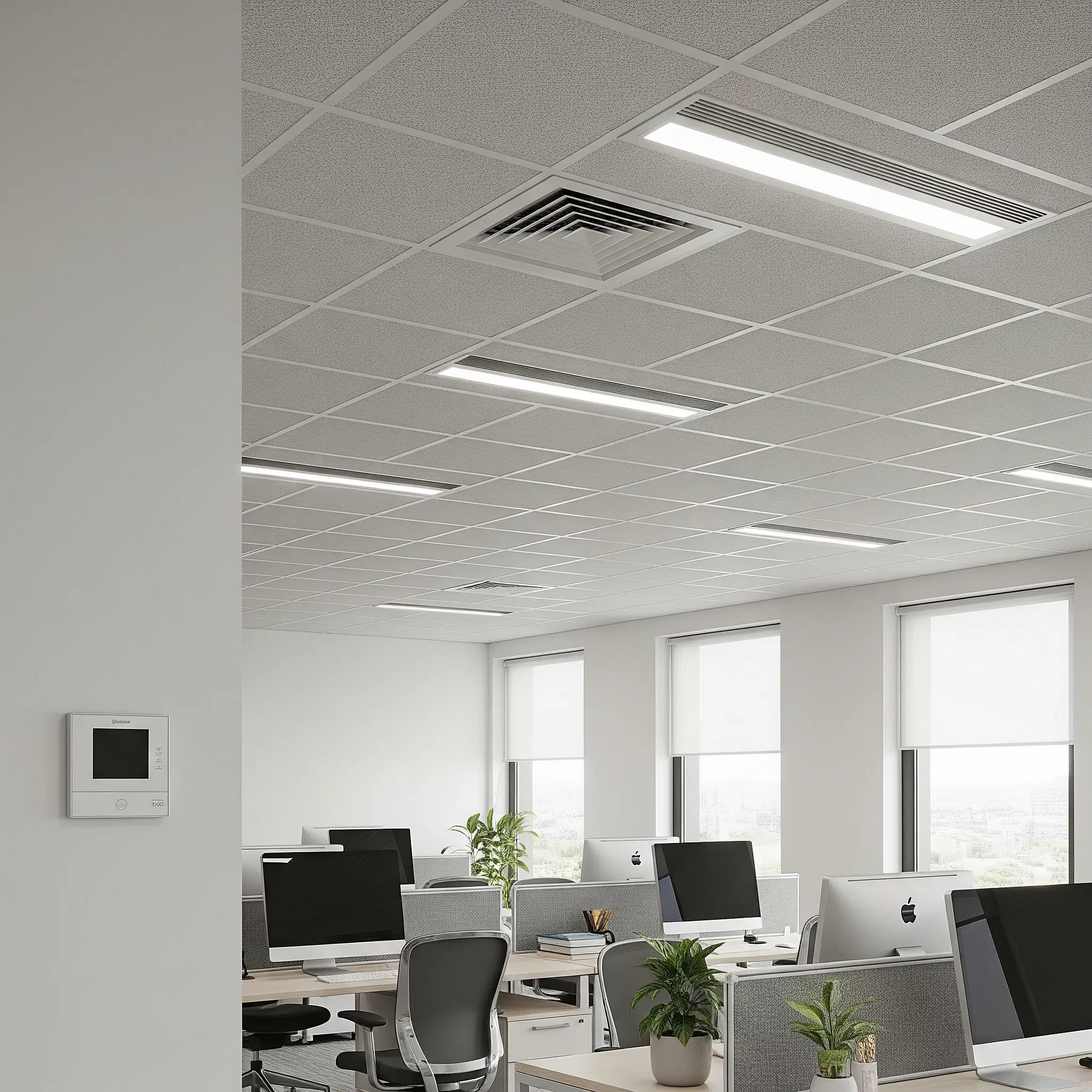
Preventive maintenance is usually less disruptive than an emergency shutdown. A commercial service visit may include checking filters, coils, drains, electrical connections, motors, refrigerant performance, thermostat operation, airflow, and safety controls. Rooftop cabinets and storm-related damage should also be inspected, particularly before peak cooling demand.
Filter frequency depends on operating conditions. A quiet office may not load filters as quickly as a restaurant, salon, workshop, or high-traffic retail store. Monthly visual checks are a useful starting point, while replacement should follow the filter type, equipment requirements, and actual dust load.
Keep a simple maintenance record with service dates, repair costs, filter changes, and energy use. This makes recurring problems easier to identify and supports more informed budgeting. Businesses paying CLECO or another regional utility should also review current commercial efficiency programs before purchasing equipment; rebates and eligibility can change.
Keep Your Business Comfortable and Open
Start with thermostat settings, accessible filters, vents, and visible signs of water or ice. If the system keeps blowing warm air, temperatures remain uneven, or electrical and mechanical symptoms appear, shut it down when appropriate and arrange a professional evaluation.
BCS Mechanical provides Light Commercial HVAC, Maintenance & Tune-Ups, Air Conditioning Repair, system replacements, and emergency and same-day service. To reduce downtime or discuss an ongoing comfort problem, contact BCS Mechanical or call 985-474-1746.